
From Plans to Action
National cancer control plans are central to a healthier future
A synthesis report from a World Health Summit side event on cancer care, produced by FP Analytics with financial support from Pfizer Inc.
Cancer remains one of the most pressing global health challenges: about one in five people are affected by the disease in their lifetime, and the number of new cancer cases worldwide is expected to increase by 77 percent between 2022 and 2050. This increase will fall disproportionately on low- and middle-income countries (LMICs), where mortality due to cancer may double by 2050. As the prevalence of cancer increases, so do the costs associated with it. The economic cost of cancer between 2020 and 2050 is projected to be USD 25.2 trillion—equivalent to a 0.55 percent tax on global gross domestic product.
The staggering burden of cancer demands concerted action both within and between countries. National cancer control plans (NCCPs)—structured programs to reduce cancer incidence and mortality and improve quality of life for cancer patients—provide a critical framework for guiding health policy and present clear benefits to patients, governments, health care providers, and society more broadly. Comprehensive cancer control strategies are estimated to prevent 12.5 percent of cancer deaths globally and generate between USD 12 and USD 38 in lifetime benefits per dollar invested. However, persistent obstacles, including workforce limitations, financing gaps, and competing policy priorities, continue to hinder their implementation.
As part of the 2025 World Health Summit’s main stage programming in Berlin, Germany, Foreign Policy, in partnership with Pfizer Inc., brought together leaders, policymakers, and experts to explore how countries are advancing NCCPs. Drawing on diverse case studies and lived experiences, the conversation highlighted shared challenges and context-specific solutions, from building capacity and securing sustainable financing to embedding innovation across the cancer care continuum. By showcasing proven approaches and fostering cross-sector collaboration, the dialogue surfaced actionable strategies that can reduce inequities and strengthen resilient health systems worldwide.
International Dialogue is Crucial for Addressing Cancer
PARTICIPANTS
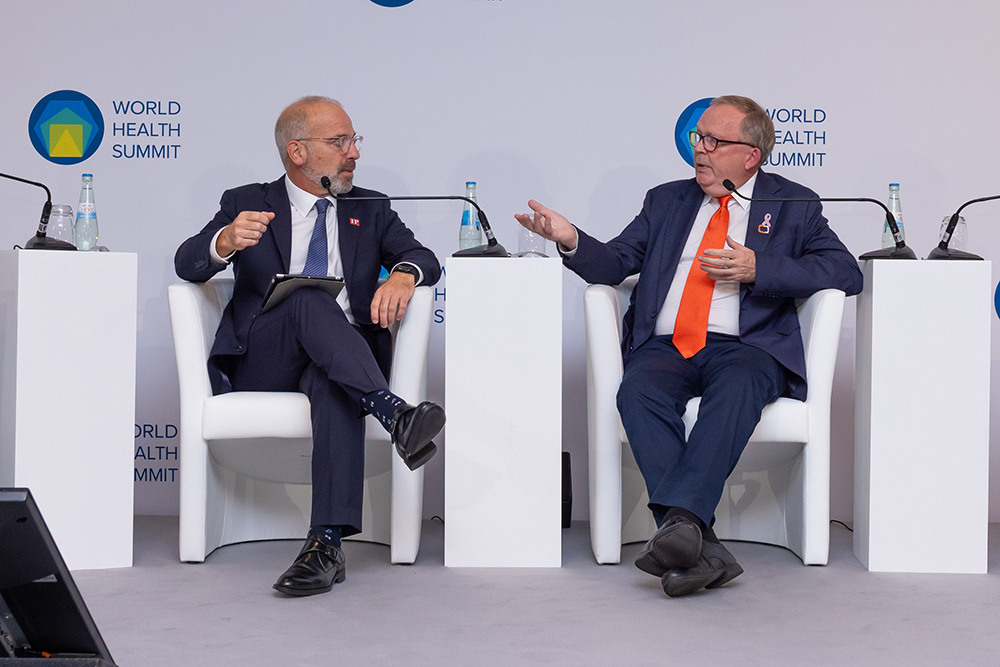
Moderated by Andrew Sollinger, CEO & Publisher, Foreign Policy
Dr. Cary Adams, Chief Executive Officer, Union for International Cancer Control
This year, the Union for International Cancer Control (UICC) organized the Cancer Planners Forum, the first meeting of national cancer planning officials at the international level. The forum gathered 44 planners from 40 countries, as well as 50 experts and participants from relevant stakeholder organizations like the World Health Organization (WHO) and the International Atomic Energy Agency (IAEA). Adams said that the event, which will be repeated next year, served as a vital space for national cancer control planners to convene, identify challenges, share lessons learned, and think ahead.
Key Takeaways
- NCCPs need to address the full spectrum of cancer prevention and care. Dr. Adams stressed that addressing cancer is “not just about chemotherapy or radiotherapy. It’s about prevention as well.” NCCPs need to include strategies for cancer prevention, early detection, patient care, treatment, and quality of life to better and more holistically improve public health. Many NCCPs, for example, lack substantive goals on providing psychological care to cancer patients despite clear need.
- Implementation depends on political will and financing. The UICC found that only 27 percent of NCCPs contained financing strategies in 2023, up from 7 percent in 2018, but still far too low. Dr. Adams said that innovative funding solutions like social impact bonds cannot replace insurance or taxation, which must be the foundation of any NCCP financing strategy. He also emphasized that for NCCPs to be effective, cancer control needs to be a consistent political priority regardless of which party is in power.
- Innovation is possible with the tools we have. AI has transformative potential for cancer screening, treatment, therapy development, and more. But Dr. Adams said that countries can improve outcomes with already available tools. He pointed to the UICC’s Access to Oncology Medicines Coalition (ATOM), led by the UICC in collaboration with 40 other partners worldwide, which aims to strengthen health care and access to cancer medicines and treatments in LMICs. He also noted Australia’s support for eliminating cervical cancer throughout the Indo-Pacific as an example of how countries can work together to make progress. Dr. Adams identified this approach as innovative “because we’re solving the problem that exists today with current products and services by creating new business models.”
Building Integrated, Data-Driven, and People-Centered Cancer Control
PARTICIPANTS
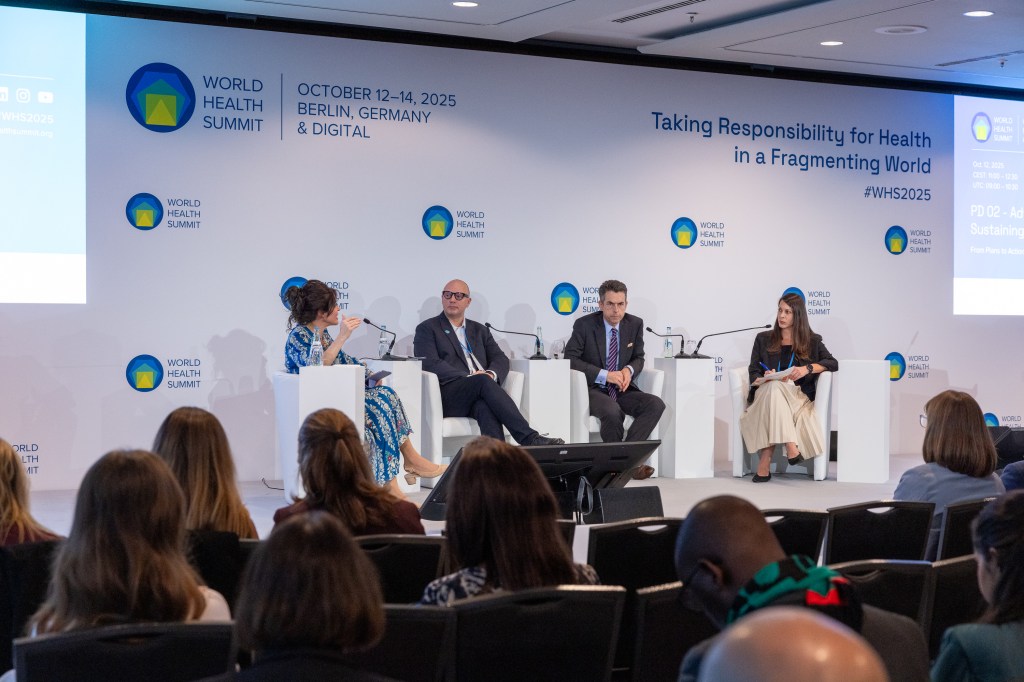
Moderated by Allison Carlson, Executive Vice President, Foreign Policy
Dr. Alarcos Cieza, Head of Management of Noncommunicable Diseases, World Health Organization (WHO)
Dr. Csaba L. Dégi, President, European Cancer Organisation (ECO)
Dr. Tim Wintermantel, Senior Principal, Global Health, IQVIA
NCCPs alone cannot drive the kind of transformative change required; they need to be integrated within broader health policy, involving all relevant stakeholders, and connected to high-quality data. In a broad discussion on boosting the effectiveness of NCCPs, panelists stressed the need to remove siloes between different stakeholders involved in cancer to deliver more holistic care and ensure better outcomes.
Key Takeaways
- National ownership and integration are essential for effective NCCPs. Effective cancer control depends on embedding national cancer plans within broader health strategies. These plans must be budgeted and adapted to the maturity of health systems to move from aspiration to measurable action. Dr. Alarcos Cieza underscored this point, saying, “Cancer strategy needs to be led by ministries of health, involving all relevant sectors and stakeholders, all levels of government, and bridging political parties.”
- NCCPs need to be accountable and people-centered. Political commitment alone is insufficient without mechanisms for accountability and transparency. Cancer strategies need to incorporate both patient and workforce needs while defining clear metrics and timelines. Dr. Csaba L. Dégi noted that the needs of the cancer workforce are acute: By 2030, there will be a global health workforce shortfall of 11 million, in part caused by clinician burnout and persistent dissatisfaction in the field. To address this challenge, leaders in cancer care need to take action to foster healthy workplaces so that health care providers can deliver the care that cancer patients depend on.
- Data is a catalyst for innovation. Strengthening data systems is critical to advancing research, improving AI applications in health care, and enabling countries to participate in clinical trials. As Dr. Tim Wintermantel explained, emerging technologies like AI will “only be powerful if we can feed it with the right data.” Collaboration between public and private sectors with open data exchange can accelerate innovation in cancer control.
Embedding Equity and Partnership in National Cancer Control
PARTICIPANTS
Moderated by Andrew Sollinger, CEO & Publisher, Foreign Policy
Professor Dorothy Keefe, Chief Executive Officer, Cancer Australia
Phoebe Ongadi, Executive Director, Kenyan Network of Cancer Organizations (KENCO)
Progress in cancer control depends on the inclusive design of NCCPs, shared leadership over their development, and their equitable implementation. Australia’s community-driven approach and Kenya’s model of partnership between civil society and government show that collaboration can drive real change in both developed and developing countries. NCCPs need to be adapted to the national context and engaged with diverse local communities to be effective and drive more equitable outcomes in cancer.

Key Takeaways
- Co-Design and leadership are essential for inclusive cancer care. Inclusive, participatory design of NCCPs plans builds trust, ensures stakeholder engagement, and delivers more equitable health outcomes. Professor Dorothy Keefe emphasized the need for national cancer control planners to foster common ownership of health policy, especially by historically underrepresented communities. Keefe pointed to the Australian Cancer Plan—which was co-designed with Aboriginal and Torres Strait Islander Peoples and features specific actions and goals with respect to those communities—as an example of how health policy guided by the principles of collaboration, inclusivity, and equity can produce better outcomes.
- Advocacy and accountability remain vital to strengthening outcomes. Civil society is a catalyst for progress when advocacy operates in partnership with government. Phoebe Ongadi highlighted the role of her organization, KENCO, in partnering with the Kenyan government both to improve cancer outcomes and so that all stakeholders “take collective accountability for policy implementation.” Ongadi, pointing to a recent march demanding urgent reforms and said that when progress lags, KENCO has a role as an external stakeholder in mobilizing communities to push the government into action.
- Innovative tools are enabling greater efficiency and learning across countries. Innovation has a key role to play in improving cancer control regardless of a country’s income level. In addition to its extraordinary success in reducing the incidence of cervical cancer, Australia is leveraging digital tools to standardize radiology reporting and reduce workforce needs. In more resource-constrained environments like Kenya, Ongadi said that innovation can look like better information sharing. The Africa Cancer Research and Control ECHO Program, for example, convenes stakeholders from across the continent to exchange evidence-based best practices.
Turning Cancer Innovation into Global Equity
PARTICIPANTS
Moderated by Andrew Sollinger, CEO & Publisher, Foreign Policy
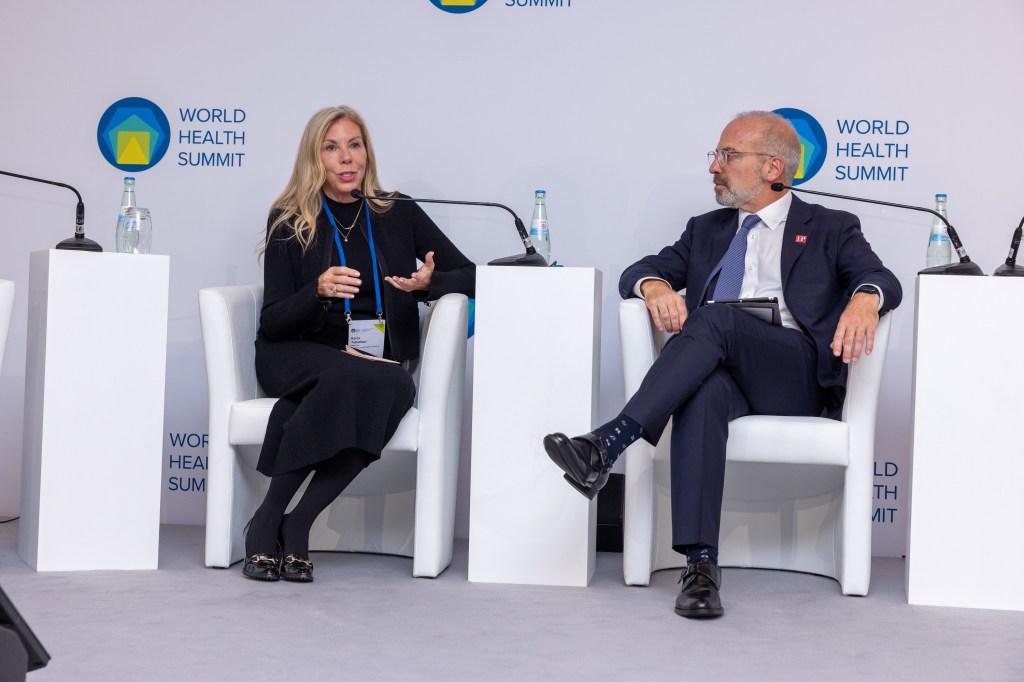
Dr. Karin Tollefson, Chief Oncology Medical Officer, Pfizer
The closing session emphasized that the future of cancer control lies at the intersection of innovation, access, and accountability. Rapid advances in oncology—from biologics to antibody-drug conjugates—have transformed survival prospects but also introduced new challenges for equitable use. Dr. Karin Tollefson explained that the task ahead is ensuring that innovation, enabled by international cooperation, reaches patients around the world through strong health systems and sustained financing.
Key Takeaways
- The future of cancer care is predicated on innovation and access. The new era of oncology offers unprecedented scientific promise but demands equitable access to therapies to ensure that innovation benefits all, not just a few. Dr. Tollefson said delivering innovative therapies depends on countries having the necessary health infrastructure but that the private sector has an important role in enabling access as well. Pfizer Inc., through its “Accord for a Healthier World,” announced in 2022 that it will offer the full portfolio of medicines and vaccines for which it has global rights on a not-for-profit basis to the 1.2 billion individuals living in 45 LMICs—an initiative that other manufacturers can replicate.
- Plans serve as roadmaps to track progress and accountability. NCCPs need to anchor measurable targets, financing, and cross-sector collaboration so that they effectively turn commitments into implementation, impact, and continuous improvement. Although each NCCP will look different, depending on the national context, Dr. Tollefson noted that there needs to be more collaboration among countries, “bringing together a global knowledge base” and “setting best practices internationally.”
- More holistic and integrated approaches are needed. More effective and equitable cancer control integrates mental health care, support for survivors, and socioeconomic reintegration. Dr. Tollefson noted this is an area where NCCPs have room for improvement. One review of NCCPs worldwide, for example, found that fewer than half referenced psycho-oncology care and that only about one-quarter of those that did included substantial content on it. Not only does a more holistic approach lead to better outcomes, it also ensures that longer life expectancy is matched by quality of life and social inclusion. NCCPs need to incorporate data and metrics on the multidisciplinary, holistic care necessary to support cancer survivors.
Looking Ahead
The discussions at the 2025 World Health Summit underscored that the future of global cancer control depends on integration, accountability, and inclusion. NCCPs need to be grounded in national context, utilize reliable and up-to-date data, and translate political commitment into measurable progress. Achieving equity will require collaboration among governments, international organizations, civil society, and the private sector, breaking silos and embedding innovation within health care systems. From prevention to survivorship, success in cancer control will hinge on shared responsibility to ensure that every person, everywhere, benefits from innovation in cancer care.
By Jack Ronan (Policy and Research Analyst).

This synthesis report from FP Analytics, the independent research division of The FP Group, was produced with financial support from Pfizer. FP Analytics retained control of the findings of this report. Foreign Policy’s editorial team was not involved in the creation of this content. Pfizer did not have influence over the report and does not retain control of it.